

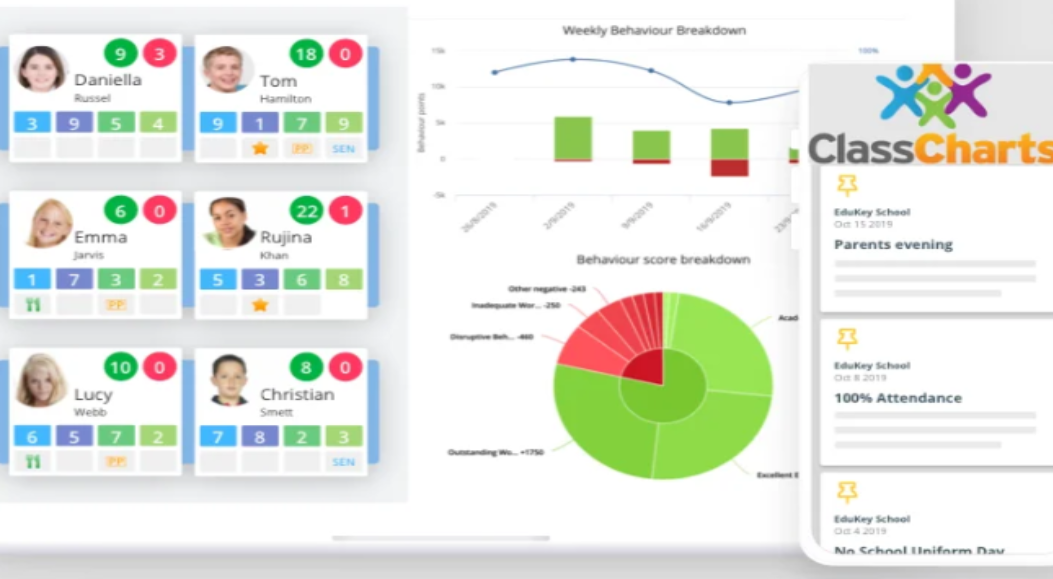
As the new school year begins, many Year 7 families will be introduced to Class Charts and similar digital communication systems.
Used well, these platforms can be really positive. They can help families celebrate achievements, understand what is happening in school and feel connected to their child’s learning.
But there is another side to this.
At Family Pathway, we have worked with a number of families whose children have ALN, are neurodivergent, experience anxiety or whose needs have been misunderstood. For some, Class Charts has quickly become a source of significant stress.
The issue is not necessarily the platform itself.
It is how we use it
When information becomes overload
Starting secondary school is a huge transition.
A Year 7 learner will suddenly be expected to manage:
- multiple teachers and classrooms;
- new routines and expectations;
- equipment and homework;
- busy transitions;
- increased independence;
- new peer relationships;
- greater sensory and organisational demands.
For a learner with differences in executive functioning, working memory, attention, communication or emotional regulation, some of these expectations may be particularly difficult.
Then the notifications begin:
Late to class.
Equipment missing.
Homework incomplete.
Talking.
Not following instructions.
One incident may appear minor.
But when those messages repeatedly arrive on a parent’s phone – and are also visible to the child – they can create a much bigger narrative:
“I am getting secondary school wrong.”
For parents, it can feel like a constant stream of evidence that their child is struggling again.
That is not insignificant.
Data without context is not meaningful communication
Schools obviously need systems for recording information and identifying patterns.
But,
recording an incident and immediately pushing that information to a family are not the same thing.
A notification rarely explains:
What happened beforehand?
What was the child finding difficult?
What support was offered?
Was the issue resolved?
Is this part of an emerging pattern?
Without that context, families receive data rather than understanding.
And repeated data can very quickly become anxiety.
Repeated difficulty should make us curious
If a learner repeatedly forgets equipment, perhaps the question should not simply be:
“Why haven’t they remembered?”
We might need to ask whether they are struggling with working memory, organisation, transitions or understanding the routine.
If they are regularly late, what is happening between lessons?
If they continually struggle to start work, do they understand the task?
If the same difficulty appears again and again on Class Charts, repeatedly recording it is unlikely to solve it.
So what could schools consider?
We are not suggesting that schools stop using Class Charts.
We are asking for more thoughtful use.
Particularly during transition, schools might consider:
- allowing time for relationships and routines to become established before every low-level difficulty is immediately communicated home;
- distinguishing between information that genuinely requires immediate parental notification and information that can be discussed, understood and resolved within school;
- contacting families directly when an issue needs context rather than relying solely on an app notification;
- looking for patterns that may indicate an unmet learning, communication, sensory or executive functioning need;
- ensuring positive recognition is not overwhelmed by repeated negative entries;
- asking families how they would prefer communication to be managed where frequent notifications are increasing anxiety.
Most importantly, children need the opportunity to repair, learn and try again.
Communication should strengthen relationships
Psychological safety does not mean removing expectations or accountability.
It means creating an environment where children can make mistakes, experience difficulty and receive support without feeling that every struggle is immediately recorded and transmitted home.
Parents need to know that school sees the whole child.
Children need to know that they are not being defined by a stream of behaviour points.
And schools need communication systems that help relationships rather than inadvertently corrode them.
Perhaps, as Year 7 begins, the question is not simply:
“Are all our parents connected to Class Charts?”
But:
“Are we using Class Charts in a way that helps families understand and support their child?”
Technology should support relationships.
It should never replace them.
Context before conclusion.
Curiosity before correction.
Support before another notification.
Why it matters:
- Frequent negative notifications without context can increase anxiety for both learners and families and reinforce a sense of failure rather than support.
- Thoughtful, relational communication helps schools build trust, understand underlying needs and respond with curiosity and support rather than repeated correction.